
Building a customer-centric product innovation tool for quickly growing CPG brands
The Problem:
Quickly growing CPG companies need a way to effectively research industry trends, analyze consumer preferences, and integrate consumer insights throughout product development—from concept through post-launch—in order to design products that resonate with target audiences, meet market demands, and drive long-term success.
Our Process & Solution:
We conducted two 4-week research sprints with product innovation leads at mid-sized CPG companies to understand their main challenges in the product innovation lifecycle. In these interviews we uncovered 4 major barriers in the product innovation process:
Lack of Direct Consumer Data: Consumer data platforms are typically built for brand & marketing use-cases, meaning the rich qualitative data is often siloed from innovation teams. This means innovation leaders are forced to conduct manual, time consuming research into customer sentiment about a brand’s own products and those of it’s key competitors
Lack of Customer Centricity in Process: Due to the inaccessibility of consumer data, CPG companies do not take a customer-centric approach to the innovation cycle. If research is conducted, it is typically done so as a validation towards the end of the product innovation lifecycle, leading innovation to fall into a sunk-costs fallacy.
Point-In-Time SaaS Solutions: Existing SaaS solutions typically only serve a single type of testing or validation, such as in-home testing. These solutions are often much more cost-effective than consulting firms and agencies but often are not as extensive in the depth of research they provide.
High Costs of Consumer Research: Most consumer testing is conducted through consultants with large contracts and expensive fees. Brands often spend $200-300k a year in consulting fees. This inhibits brands ability to run an agile process and decreases the likelihood that they can meet customer needs. Additionally, this high cost makes research inaccessible to smaller brands, leaving them with no real solution.
Through two 8-week product development sprints, our team set out to design a comprehensive innovation tool for emerging CPG. This tool addressed the previously identified problems by allowing these brands to:
Conduct extensive research into current and emerging industry and category trends to inform the development of new product lines and ensure alignment with consumer preferences and market demands.
Provide a thorough analysis of a brand and it’s key competitors to determine the product attributes and features that are most likely to resonate with the target audience and drive product success.
Systematically incorporate consumer feedback into the product design and development process to optimize product offerings and enhance consumer satisfaction.
Provide continuous monitoring and analysis of post-launch consumer feedback to assess product performance, identify areas for improvement, and inform future product development initiatives.
Our team then conducted feasibility testing for this platform by creating a working proof-of-concept to validate that all data was readily available and could yield actionable insights.
The Results:
Our platform, Umami, received $750k in initial startup investment. Our initial concept was very well received by brands in our target persona, leading to 3 design partnerships. This tool is currently in the product design & development and is expected to hit market in late 2025 to early 2026.
My Roles:
Program & Research Lead
Product Design Lead
Specific Methodologies:
Team & Product Management
Industry, Market, and Pricing Analysis
Workshop Facilitation
Qualitative Interviews & Synthesis
Journey & Persona Mapping
Research Documentation
MVP Product Roadmapping
MVP Product Design
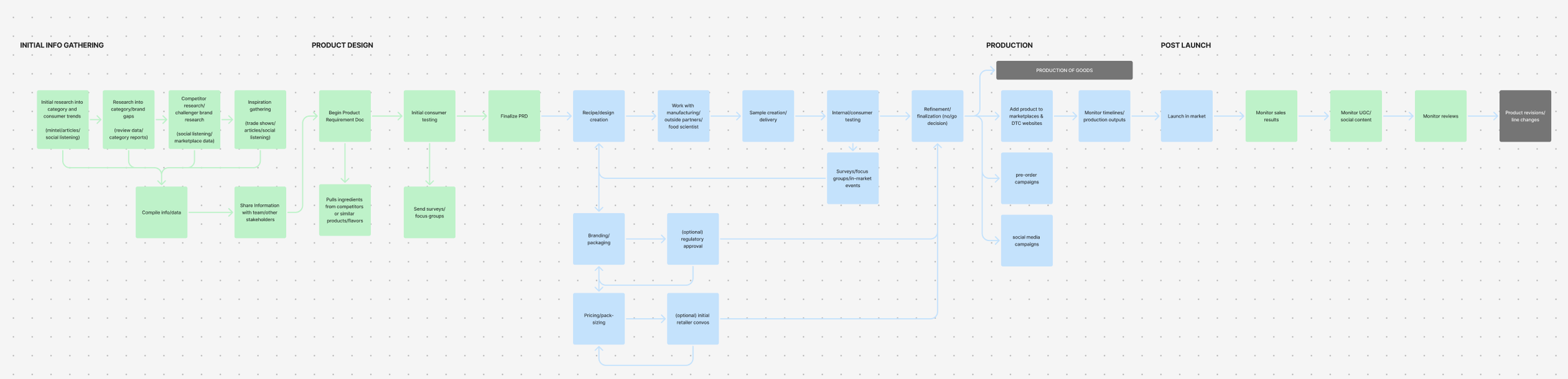
Initial user journey map created during qualitative research
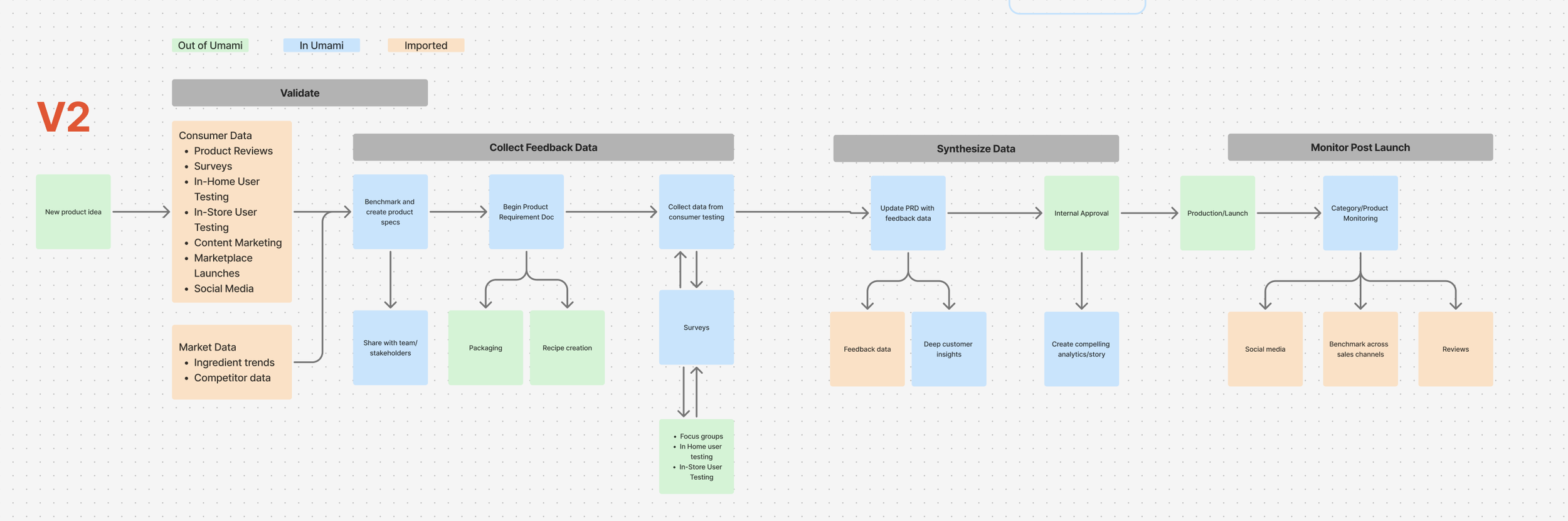
Simplified journey map created during MVP definition
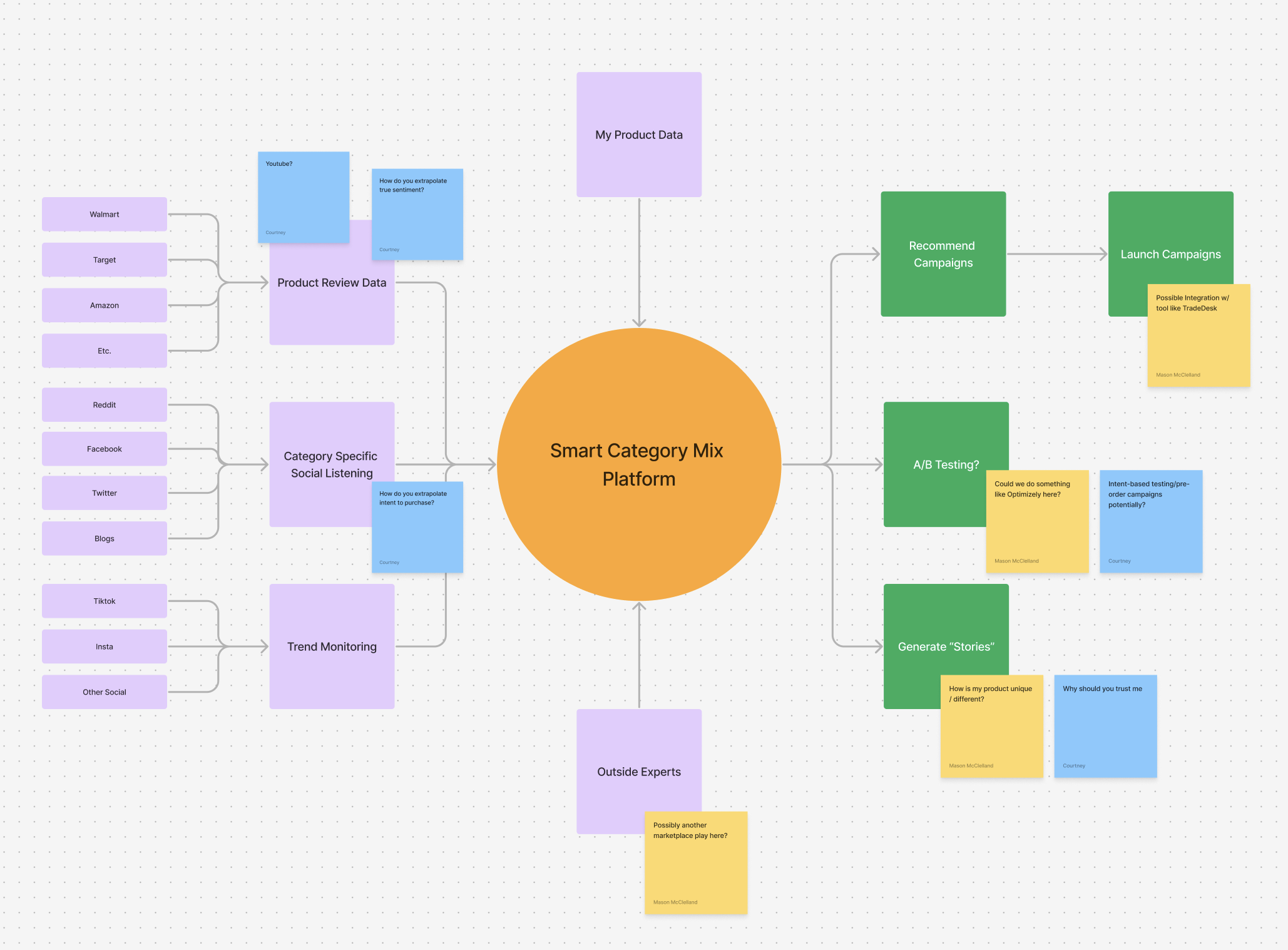
Product feature & data input mapping
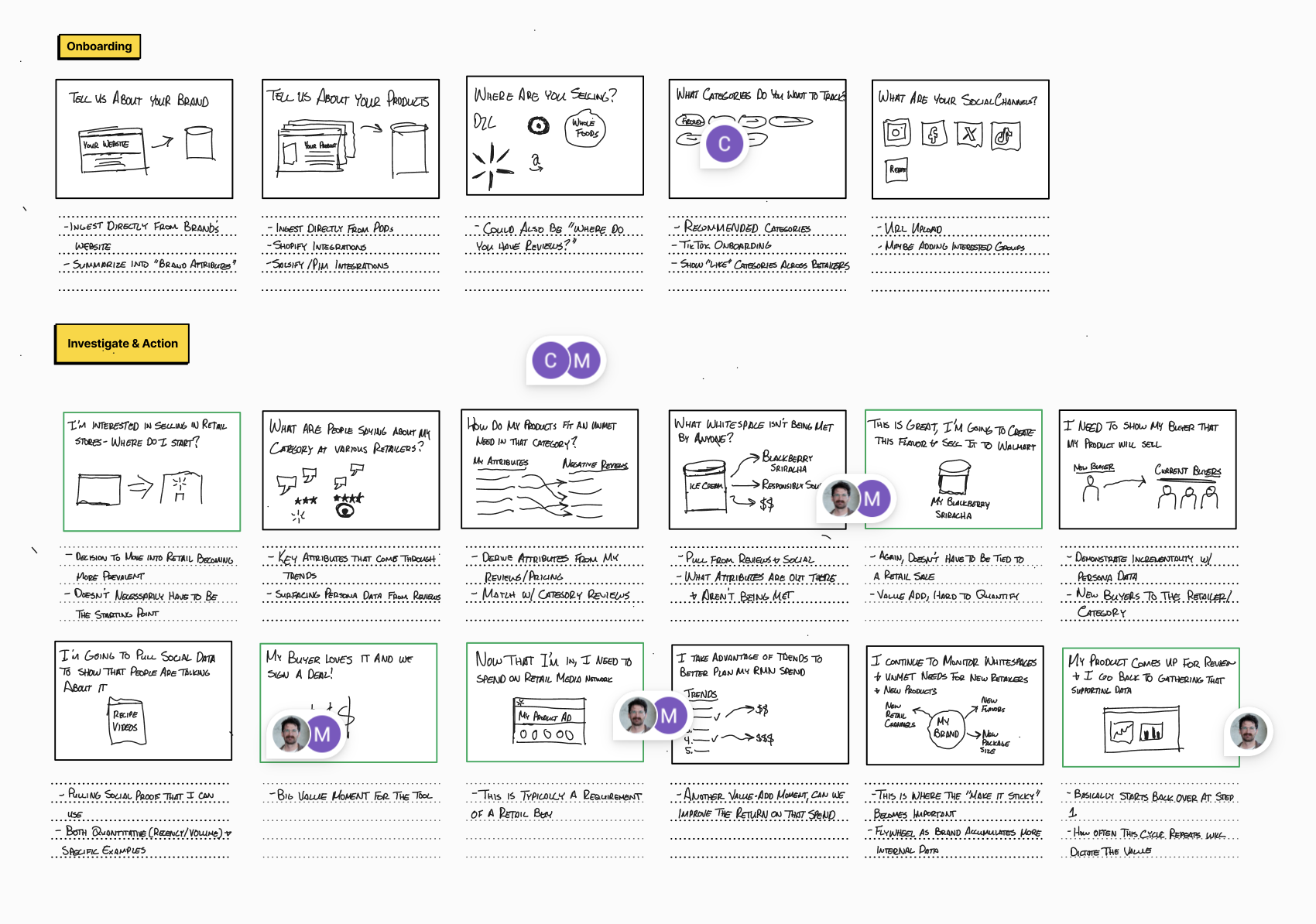
Product storyboard
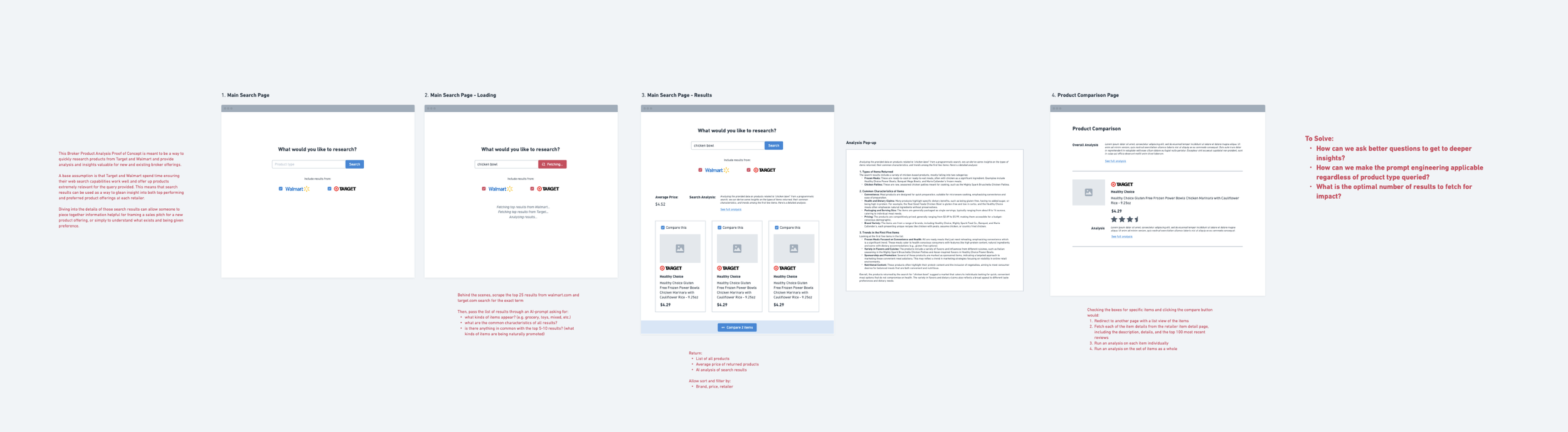
Initial low-fi wire frames
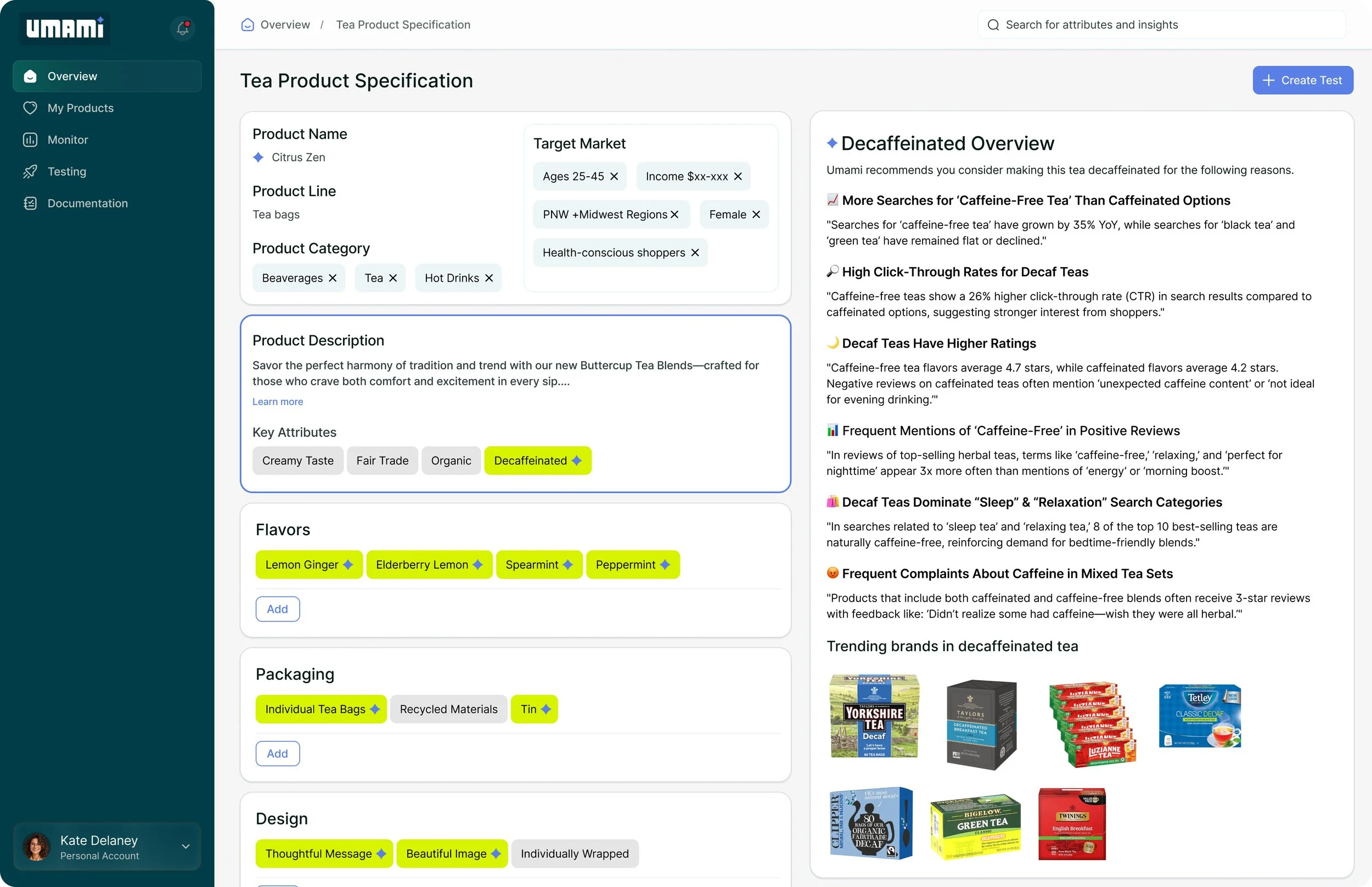
Mid-fidelity design that shows a potential “Product Spec” sheet that shows AI-enabled insights based on qualitative user feedback from existing products in the market
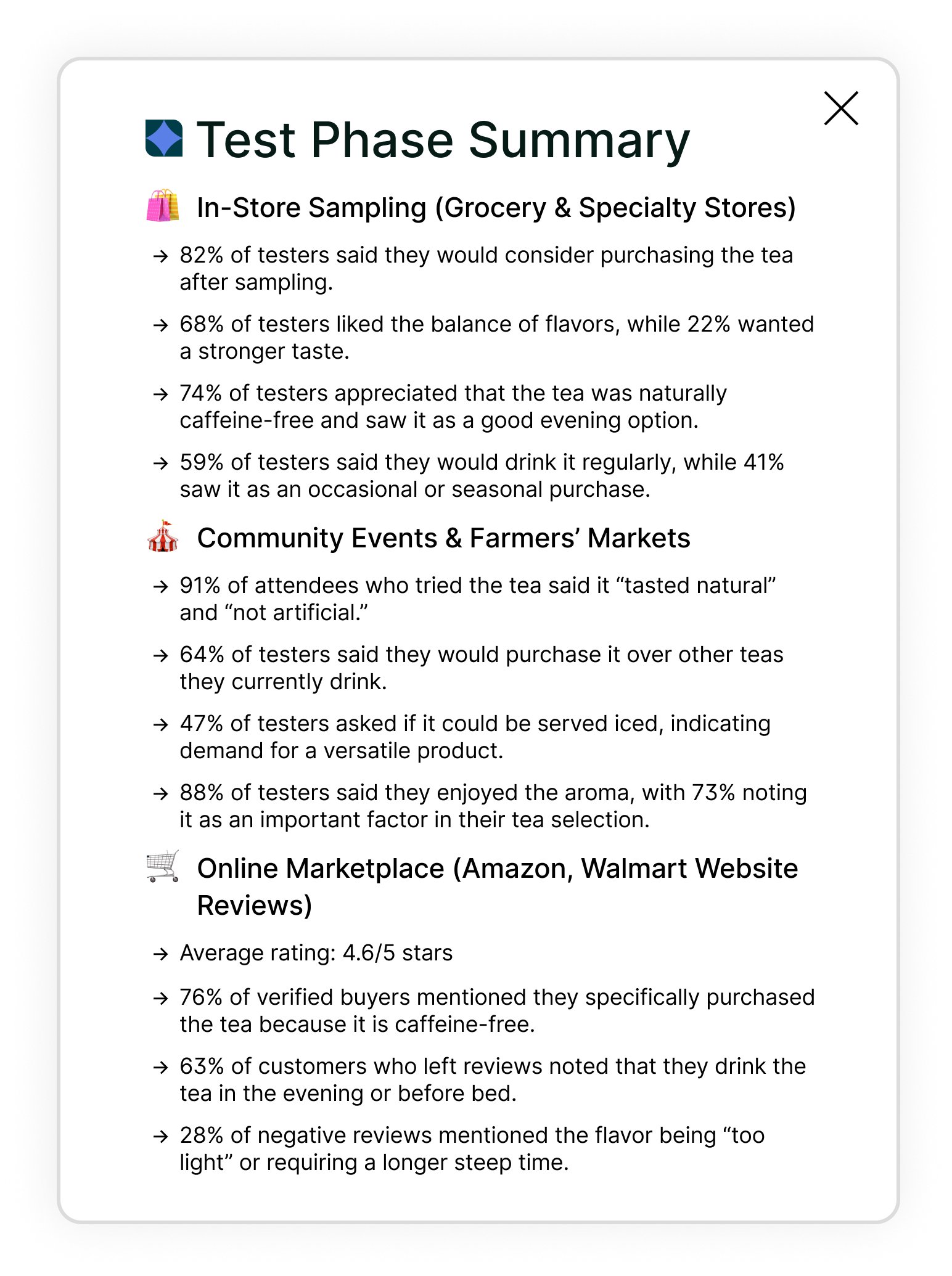
Sidebar design that shows AI-enabled insights based on user-testing of potential new products
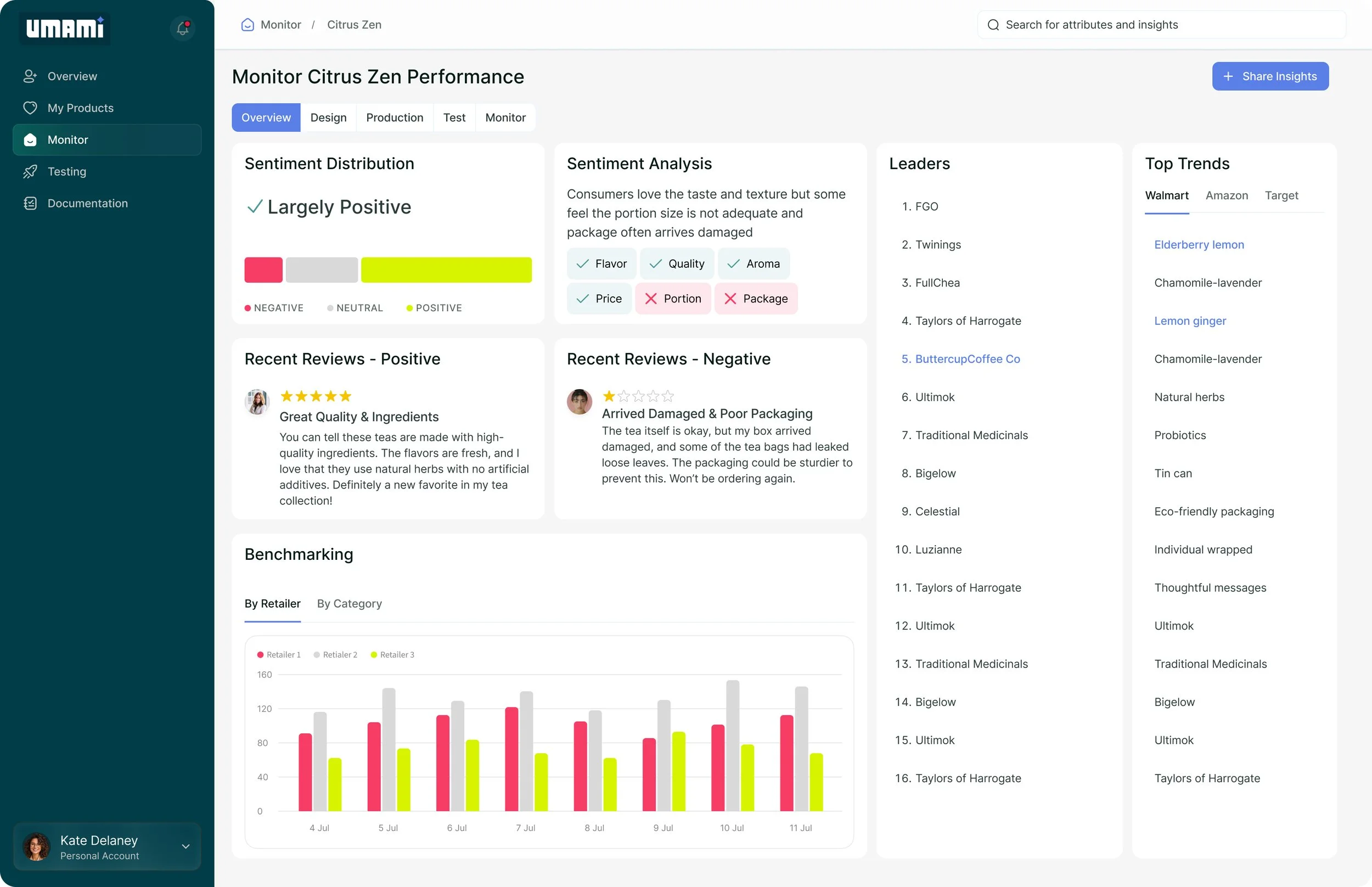
Mid-fidelity design that shows examples of a “post-launch” dashboard for brands